
The camera often finds the leak before the ceiling does
A lot of chimney leaks in Corona are found by accident. Someone books a flue scan for a sale or an insert, and the footage shows dark streaks running down the tile, a puddle of grit on the smoke shelf, or rust on the damper plate. Nobody had seen a drip indoors. The water was getting in at the top and soaking into the flue and the brick, and only a camera could see it.
Our winters are short, but the rain comes in bursts, and a chimney that lets water in during a few storms a year still takes damage. Clay tile cracks when wet masonry heats up. Mortar joints wash out. Steel parts rust. The source is nearly always at the top of the chimney, at one of three parts: the crown, the cap, or on factory-built chimneys, the chase cover.
What the footage shows when water is getting in
On the scan, water damage has a look of its own:
- Streaking down the tile walls, usually starting just below the crown.
- Efflorescence, a white crust where water has carried salts out of the masonry.
- Wet or crumbling mortar joints in the top few tiles.
- Grit and flakes on the smoke shelf, washed down from above.
- Rust on the damper, the firebox steel, or the inside of a metal chimney pipe.
- Spalled tile faces near the top, where the glazed surface has popped off.
From the roof, the inspection then traces the streaks back to their source.
The crown
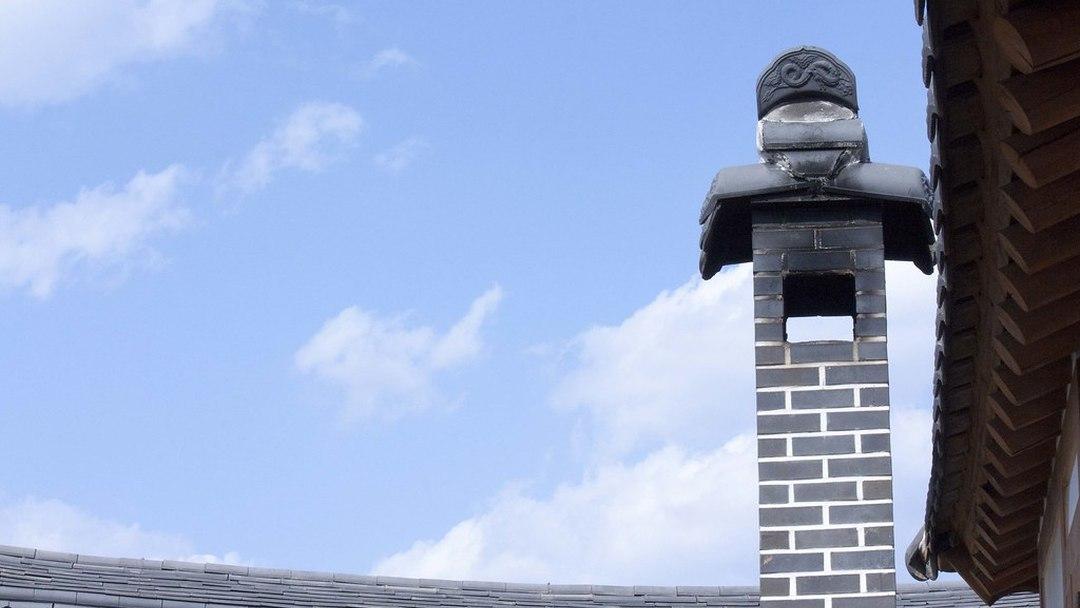
Up top, a cement crown wraps the flue tile and tips rain away from the brick below. Crowns crack from heat cycles, from settling, and from being poured too thin to begin with. A cracked crown sends rain straight down into the brick and around the outside of the flue tile.
Hairline splits take an elastic crown coating. One split clean through, or one that was built flat with no slope, is usually removed and recast. The written quote names which, with photos of the cracks that set the choice. See our chimney crown repair page for the details of the job.
The cap
A cap keeps rain, leaves and animals out of the open top of the flue. Many Corona chimneys either never had one or have one that rusted, bent or blew loose in a Santa Ana wind event. Without a cap, every storm rains straight down the flue.
A chimney cap, installed, is quoted after we measure the flue. Single flue caps cost less than larger multi-flue covers, and the metal, stainless or galvanized, changes the price. A cap with a spark arrestor screen also helps on houses that back onto brush or open hillside, where wind-blown embers during fire season are a real concern. See chimney cap installation.
The chase cover
Factory-built fireplaces, common in Corona tract houses from the 1980s on, do not have a masonry crown. They have a wood-framed chase boxed around a metal chimney pipe, topped with a sheet metal chase cover. When that cover rusts through or was made flat so water pools, rain runs in around the pipe and into the framing below. The scan shows rust inside the pipe; the roof inspection shows the pooling and the rust holes.
Chase covers are made to fit the chase, so the price depends on its size and the material. Stainless holds up longer than galvanized through years of winter rain and summer heat. The chimney chase cover page covers the job.
What decides the price
Each of these repairs has its own price, and the written quote breaks them out. What moves each line:
- Crown: sealing versus recasting, and the size of the stack.
- Cap: the number of flues covered and the material.
- Chase cover: the chase dimensions and stainless or galvanized.
- Flashing: whether the leak is at the roofline instead, which is a separate repair.
- Damage below: whether water has already cracked tile or rusted the damper, which may add liner or damper work.
- Waterproofing: whether the brick itself needs a vapor-permeable sealer once the top is fixed.
Everything other than the cap is quoted in writing after the inspection. A Level 2 chimney inspection with video scan, $375, gives both the inside and outside view the quote needs.
Use the quote form to describe what you have seen: where a stain shows indoors, whether the chimney is brick or a sided chase, and whether it has a cap. That tells us whether we are likely looking at a crown, a cap or a chase cover, and we follow with the scan and a written quote.
Fix the top before the inside
The order matters. A new liner, or new tile repairs, will not last under a chimney that is still letting water in. When the footage shows both water damage and a leaking top, the quote sequences the work: top first, then the flue. Often both happen on the same visit, which saves a second roof setup.
Why waiting costs more
A cracked crown is a modest repair. Left through a few rainy seasons, it becomes cracked tile, rusted damper steel and soft brick at the top of the stack, and the quote grows from one line to four. On a factory-built chimney, a rusted chase cover left in place can rot the framing under it. The footage from an early scan is usually the cheapest version of the job you will see.
Related jobs
Water at the top sometimes travels sideways to the flashing. The chimney leak repair page covers tracing leaks to their source, and chimney waterproofing covers sealing the brick once the top is sound. For flues already damaged by water, read chimney liner cost in Corona.
Book the leak scan
Tap the call button and describe what turned up: a stain, a rusty damper, or streaks on an old camera report. We book the scan for your Corona, Riverside, Yorba Linda or Diamond Bar home and write the repair quote against what it finds.
Ready to See Inside the Flue?
Roper Chimney Pros runs camera inspections, liners, inserts and rebuilds from Corona. Call to book a scan, and the report and stills come back with a written quote for any repair.